The Future is Already Here...
You Just Haven't Noticed Yet

Dotting Tomorrow's Tech Today

Latest Blog Post

Challenges expected in our attempt to bring Digital Tech Skills to Nigerian children

Challenges expected in our attempt to bring Digital Tech Skills to Nigerian children

CHALLENGES EXPECTED IN OUR ATTEMPT TO BRING TECH SKILLS TO CHILDREN IN NIGERIA While the vision of equipping Nigerian children with tech and digital skills is promising, several challenges must be addressed to make it a reality. Infrastructure deficits remain a major hurdle Many schools, especially in rural areas, lack electricity, internet connectivity, and even basic computer equipment. Without reliable infrastructure, delivering tech education becomes nearly impossible.   Lack of trained teachers is another challenge Many educators are not equipped with the necessary digital skills themselves, and there is limited access to professional development programs. Without capable instructors, students cannot receive quality tech education.   Funding constraints also hinder progress  The cost of devices, internet access, and learning tools can be high. Public schools often operate on limited budgets, making it difficult to sustain tech programs without external support or partnerships.   Cultural and awareness barriers exist too  Some parents and communities may not understand the value of digital skills, especially in areas where basic education is still a struggle.   Policy implementation gaps often slow progress Even when strong policies are introduced, weak follow-through and corruption can derail efforts.  

Saheed
Saheed

6 STEPS NEEDED INORDER TO MAKE NIGERIAN CHILDREN DIGITALLY UPRIGHT

6 STEPS NEEDED INORDER TO MAKE NIGERIAN CHILDREN DIGITALLY UPRIGHT

6 STEPS NEEDED INORDER TO MAKE NIGERIAN CHILDREN DIGITALLY UPRIGHT  1. Integrate Tech Education into the Curriculum Revise school syllabi to include coding, robotics, digital literacy, and basic computer science from primary school. Start with simple tools like Scratch, then gradually introduce languages like Python or web development basics. 2. Train and Equip Teachers Many teachers lack digital skills themselves. Organize training programs to empower them with tech competencies and teaching methodologies. Provide continuous professional development so teachers stay up-to-date with evolving technologies. 3. Provide Access to Digital Tools Equip schools with computers, internet access, and educational software—especially in rural and underserved areas. Public-private partnerships can help sponsor laptops, solar-powered digital labs, or mobile learning buses. 4. Promote Tech Clubs and Extracurriculars Encourage coding clubs, robotics teams, hackathons, and STEM competitions in schools and communities. These activities make learning fun and build hands-on experience. 5. Leverage Online Learning Platforms Introduce students to free or low-cost platforms like Khan Academy, Scratch, Code.org, and Google CS First. Translate or adapt content to local languages for better inclusion. 6. Community and Parental Engagement Educate parents and communities about the importance of digital skills. Provide community tech centers where children can learn outside school hours.  

Saheed
Saheed

3 Reasons why Nigerian children must have access to Digital skills from an early age.

3 Reasons why Nigerian children must have access to Digital skills from an early age.

Reasons why Nigerian Children must have access to learn digital skills from an early age. In today's fast-evolving world, it is paramount for Nigerian children to acquire tech and digital skills from a young age. This foundational exposure prepares them for a future where technology is central to every aspect of life. There are three major reasons why this is crucial:  1. Future Job Readiness 2. Global Competitiveness  3. Problem-Solving and Innovation Development 1. Future Job Readiness The job market is rapidly shifting toward digital and tech-driven roles. Careers in fields such as software development, cybersecurity, data analysis, and artificial intelligence are becoming more prominent. For Nigerian children to thrive in this economy, they must be equipped with digital literacy and the ability to work with technology. Early exposure gives them a head start and makes them better prepared for these opportunities. 2. Global Competitiveness Technology has made the world a global village, and today’s youth must be able to compete with their peers globally. Children in developed countries are introduced to coding, robotics, and digital tools from early stages. Nigerian children need similar exposure to close the digital divide. Equipping them with these skills ensures they can contribute meaningfully on the international stage and not be left behind in the global tech race. 3. Problem-Solving and Innovation Development Tech education encourages critical thinking, creativity, and problem-solving—skills necessary for innovation. Through learning how to code, use digital tools, or build simple projects, children become more curious and solution-oriented. This mindset is essential for addressing many of Nigeria’s local challenges, from education and health to agriculture and governance.  

Saheed
Saheed

Figma stock pops 5% in second day of trading after colossal debut

Figma stock pops 5% in second day of trading after colossal debut

Key Points Figma stock popped 5% in its second day of trading, after shares more than tripled in its New York Stock Exchange debut.  The design software vendor is the latest tech company to hit the public markets after an extended IPO drought. Figma opened at $85 under the ticker FIG.   Shares of design software vendor Figma popped more than 5% on Friday, a day after the stock more than tripled in its New York Stock Exchange debut.  Figma opened at $85 on Thursday under the ticker FIG, and shares closed at $115.50 for a 250% gain. On Friday, the stock traded above $120. Figma is the latest tech company to hit the public markets after an extended IPO drought. Artificial intelligence infrastructure provider CoreWeave debuted in March, followed by the digital physical therapy company Hinge Health in May. The stablecoin issuer Circle, virtual chronic care company Omada Health and the online banking services provider Chime all went public in June. In an update to its prospectus last week, Figma said it would price shares at $25 to $28 each. On Monday, it issued another update and said it expected pricing between $30 and $32. The company ultimately priced shares $1 above that range. Figma, founded in 2012, almost had a very different story. Adobe tried to buy the company for $20 billion in 2022, but after U.K. regulators said the acquisition would likely harm competition, the deal fell apart the following year. The San Francisco-based company ranked 45th on CNBC’s 2025 Disruptor 50 list of private companies. Curated by journalists from DevBlog...  

Samuel
Samuel

Before You Pick a Digital Skill, Start Here

Before You Pick a Digital Skill, Start Here

Everyone wants to learn a digital skill—something to help them earn more, stand out, or stay relevant. But most people jump straight to what to learn without asking why they want to learn it.   Here’s the truth: Before any digital skill, learn how to solve problems.   Not with a course. Not with an app. Just with your mind.   Train yourself to notice problems, think through them, try different angles, and not give up easily. If you don’t enjoy solving problems, no skill will really stick, because every digital path comes with challenges.   Once you’re building that problem-solving muscle, look inward. What do you enjoy doing? What topics naturally interest you? What kind of tasks feel less like a chore?   That’s where you’ll find clues about the right digital skill to learn. Whether it’s writing, designing, analyzing, coding, or managing—there’s a digital version of almost every interest. (Read this line again).   Start from there; start with you—not with trends.   Ayotomiwa

Ayotomiwa
Ayotomiwa

Overwhelmed by which Programming Language to start with?

Overwhelmed by which Programming Language to start with?

If you're new to coding, you're probably stuck on the same question a million others have asked:   "Which programming language should I learn first?"   Here’s the honest answer: It doesn’t matter as much as you think.   What matters is starting.   That said, if you want a solid recommendation: learn Python.   It’s readable, beginner-friendly, and used everywhere—from web development to data science to automation. You’ll get fast results and build real things early on, which keeps you motivated. You can make your researches more on Python.   Worried that picking the “wrong” language will ruin your future? Don’t be. Once you learn one language well, picking up others becomes way easier. Programming is more about thinking like a developer than memorizing syntax.   So instead of burning time comparing Python vs. JavaScript vs. C++ for weeks, just pick one and start building. Momentum beats indecision every time.   The best first language is the one you actually use. I hope you find this helpful.   Ayotomiwa

Ayotomiwa
Ayotomiwa

GOOGLE LOSES APPEAL OVER APP STORE REFORMS

GOOGLE LOSES APPEAL OVER APP STORE REFORMS

Google has lost a major legal battle against Epic Games, the maker of Fortnite, over antitrust practices in its app store Play. The San Francisco-based 9th US Circuit Court of Appeals rejected Google's attempt to undo a ruling that said the company unfairly controlled how Android users get their apps and make payments. The court ordered Google to revamp its app store, allowing rival app stores to operate within its ecosystem and enabling developers to use alternative payment methods.   The dispute began in 2020 when Google removed Fortnite from its store for bypassing Google's billing system, which imposes up to a 30% fee on transactions. Epic Games accused Google of monopolizing how consumers access apps on Android devices and pay for transactions within apps. A San Francisco jury in 2023 found Google's practices unlawful, and US District Judge James Donato ordered Google to restore competition.   The appeals court panel said Google's behavior blocked competition and helped it stay on top. The ruling could boost competition, potentially lowering costs for developers and consumers alike. Google has signaled it may appeal to the Supreme Court, but for now, the injunction's implementation looms, which could begin as early as November.   The reforms mandated by the court include allowing rival app stores to operate within Google's ecosystem for at least three years, prohibiting anticompetitive agreements with manufacturers, and enabling developers to use alternative payment methods without retaliation. This could erode Google's revenue from the Play Store, which generated billions annually through commissions.   The decision aligns with mounting scrutiny from regulators globally. The European Union's Digital Markets Act already forces similar openness on tech giants, and this US verdict could embolden antitrust enforcers in other jurisdictions. Epic's victory might encourage other developers to pursue their own claims against app store fees.¹ ²   Google has expressed concerns that the reforms will significantly harm user safety, limit choice, and undermine innovation in the Android ecosystem. However, Epic has defended the verdict and court injunction, stating that the Android app market has been suffering under anti-competitive behavior for nearly a decade.

Olalekan
Olalekan

TELEGRAM LATEST UPDATE

TELEGRAM LATEST UPDATE

Telegram has rolled out several updates to enhance user experience and security. One of the significant updates includes a new public post search feature, allowing users to find posts from public channels that match the search query. This feature is particularly useful for finding specific content across various channels and is available exclusively to Telegram Premium subscribers. The update also introduces collectible gifts, which can be upgraded into unique artworks with custom designs. Each collectible gift comes with random traits like background colors and icons, making every piece one-of-a-kind. Users can gift these artworks directly or trade them on NFT marketplaces using Telegram Stars to cover blockchain fees. Additionally, Telegram has enhanced its search functionality with advanced filters, allowing users to narrow down search results by type of chat, such as private messages, group chats, or channels. This feature significantly increases navigation efficiency, saving time when searching for specific messages.   Other notable features in the update include:    Reactions for Service Messages: Users can now react to service messages, such as notifications for gifts, new group members, or video calls, making interactions more engaging.  Third-Party Verification: Public figures and organizations can now get verified through third-party services, adding an extra layer of authenticity and trustworthiness to their profiles.  Customizable Emojis for Chat Folders: Premium users can personalize their chat folders with custom emojis, adding a fun and expressive touch to their organization system. In-App QR Code Scanner: Users can now scan QR  codes directly within the app, seamlessly opening links in their preferred browser   Overall, Telegram's latest update focuses on improving user engagement, security, and personalization, making the messaging experience more enjoyable and secure for its global user base.

Olalekan
Olalekan

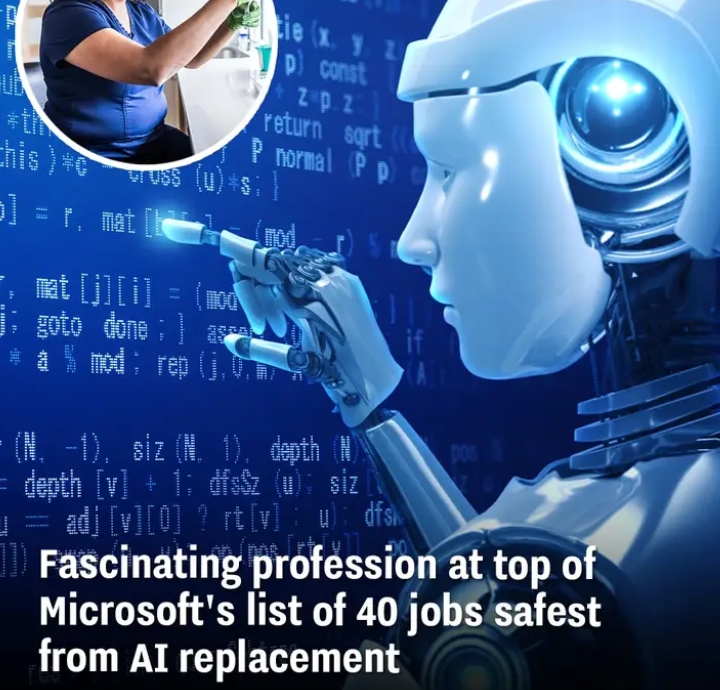
Fascinating professions at the top of Microsoft's top 40 jobs that won't be displaced by Robot(AI)

Fascinating professions at the top of Microsoft's top 40 jobs that won't be displaced by Robot(AI)

MICROSOFT release a list of jobs that won't be displaced by robots, and if you ever work at this company, your job is safe    1.Automotive Glass Installers and Repairers 2.Bridge and Lock Tenders 3.Cement Masons and Concrete Finishers 4.Cleaners of Vehicles and Equipment 4.Commercial Divers 6.Construction Laborers 7.Continuous Mining Machine Operators 8.Cooks, Short Order 9.Derrick Operators, Oil and Gas 10.Dishwashers 11.Dredge Operators 12.Drywall and Ceiling Tile Installers 13.Earth Drillers, Except Oil and Gas 14.Excavating and Loading Machine and Dragline Operators   15.Fallers (logging) 16.Fence Erectors 17.Floor Sanders and Finishers 18.Food Cooking Machine Operators and Tenders 19.Forest and Conservation Workers 20.Graders and Sorters, Agricultural Products 21.Highway Maintenance Workers 22.Insulation Workers, Mechanical 23.Janitors and Cleaners 24.Landscaping and Groundskeeping Workers 25.Logging Equipment Operators 26.Mine Cutting and Channeling Machine Operators 27.Oil and Gas Rotary Drill Operators 28.Packaging and Filling Machine Operators and Tenders 29.Painters, Construction and Maintenance 30.Parking Lot Attendants 31.Paving, Surfacing, and Tamping Equipment Operators 32.Pest Control Workers 33.Phlebotomists 34.Plasterers and Stucco Masons 35.Pourers and Casters, Metal 36.Refuse and Recyclable Material Collectors 37.Roofers 38.Roustabouts, Oil and Gas 39.Structural Iron and Steel Workers 40.Tire Repairers and Changers

Olalekan
Olalekan

Full Stack in the Cloud: AWS Amplify, Azure Static Web Apps, and Beyond

Full Stack in the Cloud: AWS Amplify, Azure Static Web Apps, and Beyond

Full stack development is moving to the cloud—not just for hosting, but for the entire development lifecycle. In 2025, platforms like AWS Amplify and Azure Static Web Apps are offering developers an all-in-one toolkit for frontend, backend, and CI/CD.   Cloud-Native Development Platforms   AWS Amplify: Offers frontend hosting, GraphQL APIs, authentication, file storage, and CI/CD   Azure Static Web Apps: Static + dynamic hosting with built-in GitHub actions and functions     Key Benefits   - No Server Maintenance: All infrastructure is managed   - CI/CD Ready: Auto-deploy on git push   - Integrated Security: OAuth, IAM, and environment secrets     Common Use Cases:   - Portfolios and blogs   - Startup MVPs   - Internal tools and dashboards     Comparison Table   Feature AWS Amplify Azure Static Web Apps   Auth Integration Cognito Azure AD, GitHub API Support REST/GraphQL Azure Functions DB Integration DynamoDB, RDS Cosmos DB Deployment Trigger GitHub/GitLab GitHub only     In conclusion, Cloud-native full stack development is the new normal in 2025. Whether you choose AWS or Azure, these platforms empower developers to focus on building, not configuring.

Grace
Grace

Page 1

Let's Talk

Do you want to learn more about how I can help your company overcome problems? Let us have a conversation.