Latest Full Stack Development Post

Full Stack in the Cloud: AWS Amplify, Azure Static Web Apps, and Beyond

Full Stack in the Cloud: AWS Amplify, Azure Static Web Apps, and Beyond

Full stack development is moving to the cloud—not just for hosting, but for the entire development lifecycle. In 2025, platforms like AWS Amplify and Azure Static Web Apps are offering developers an all-in-one toolkit for frontend, backend, and CI/CD.   Cloud-Native Development Platforms   AWS Amplify: Offers frontend hosting, GraphQL APIs, authentication, file storage, and CI/CD   Azure Static Web Apps: Static + dynamic hosting with built-in GitHub actions and functions     Key Benefits   - No Server Maintenance: All infrastructure is managed   - CI/CD Ready: Auto-deploy on git push   - Integrated Security: OAuth, IAM, and environment secrets     Common Use Cases:   - Portfolios and blogs   - Startup MVPs   - Internal tools and dashboards     Comparison Table   Feature AWS Amplify Azure Static Web Apps   Auth Integration Cognito Azure AD, GitHub API Support REST/GraphQL Azure Functions DB Integration DynamoDB, RDS Cosmos DB Deployment Trigger GitHub/GitLab GitHub only     In conclusion, Cloud-native full stack development is the new normal in 2025. Whether you choose AWS or Azure, these platforms empower developers to focus on building, not configuring.

Grace
Grace

Serverless Full Stack with Next.js & Supabase: Build Faster in 2025

Serverless Full Stack with Next.js & Supabase: Build Faster in 2025

Gone are the days when you needed a massive backend to launch your full stack app. With serverless and modern tools like Next.js and Supabase, developers in 2025 are building powerful apps without traditional backend stress.   What is Serverless Full Stack? Serverless means you don’t manage infrastructure. Instead, you use functions, APIs, and databases that scale automatically and charge only for use.   Why Next.js + Supabase is Popular in 2025   Next.js: Hybrid framework for static + dynamic sites with routing, SSR, and API routes   Supabase: Firebase alternative that offers real-time DB, authentication, file storage, and instant REST APIs     Developer Benefits   - Speed: Build MVPs in days   - Security: Auth and DB roles out of the box   - Scale: Deploy to millions with minimal config     Example Use Cases:   - SaaS dashboards   - Real-time collaboration tools   - Ecommerce landing pages with dynamic cart and checkout     In conclusion, If you want to build fast, deploy instantly, and avoid backend boilerplate, Next.js + Supabase is a future-ready stack in 2025.

Grace
Grace

MEVN is the New MERN: Why Vue is Taking Over in 2025

MEVN is the New MERN: Why Vue is Taking Over in 2025

React has dominated frontend frameworks for years, but in 2025, Vue.js is gaining major ground. MEVN (MongoDB, Express, Vue, Node) is becoming the preferred stack for startups and enterprises alike.   Why Developers Are Switching to Vue Vue 3 introduced Composition API, Vite, and significant performance improvements. It’s easier to learn than React and less opinionated than Angular, making it beginner-friendly yet powerful.   MEVN Advantages:   - Simplicity: Vue’s syntax is cleaner and more intuitive   - Performance: Faster builds and smaller bundles with Vite   - Tooling: Excellent devtools, built-in state management (Pinia)     Real-World Use Cases From dashboards to e-commerce platforms, MEVN is used for:   - Progressive Web Apps (PWAs)   - Admin panels and CRMs   - Real-time applications with socket.io     Getting Started with MEVN Start with Vue CLI or Vite. Set up Express for backend routes. Use MongoDB Atlas for hosting your database. Connect the frontend via Axios or Fetch API.   In conclusion, If you’re looking to build fast, scale easily, and enjoy development, MEVN is a stack worth learning in 2025.

Grace
Grace

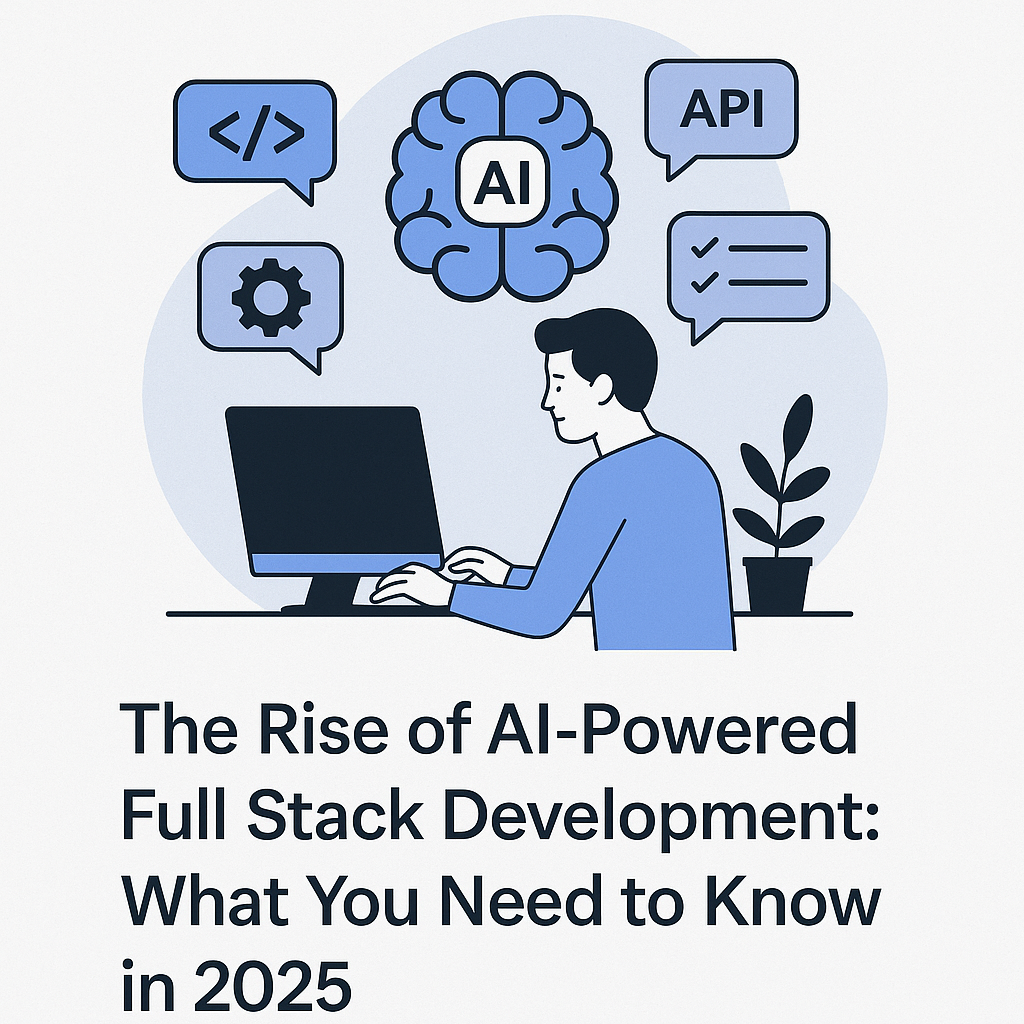
The Rise of AI-Powered Full Stack Development: What You Need to Know in 2025

The Rise of AI-Powered Full Stack Development: What You Need to Know in 2025

The future of full stack development is being reshaped by artificial intelligence (AI). In 2025, AI tools are no longer just coding assistants—they're integrated team members, enhancing productivity, reducing bugs, and streamlining workflows.   AI Across the Stack AI tools now assist across the full development stack. On the frontend, tools like GitHub Copilot and ChatGPT help generate code snippets, components, and even complete pages. For the backend, AI can scaffold REST APIs, manage database schema migrations, and even write test cases.   Top AI Tools for Full Stack Devs in 2025:   GitHub Copilot: Auto-completes code with context   ChatGPT: Debugs, explains code, and writes documentation   Testim.io: AI-based end-to-end test automation   CodeWhisperer: AWS’s code generator that integrates with cloud services     Benefits of AI-Powered Development   - Rapid prototyping and MVP development   - Fewer syntax and logic errors   - Automated test generation   - Faster code reviews     What Does This Mean for Developers? Junior developers benefit by learning on the job through AI-generated suggestions. Senior devs save time on repetitive tasks. However, it also means developers must now focus more on architecture, security, and understanding what AI produces.   In conclusion AI is not replacing full stack developers but empowering them. Those who learn to harness AI tools effectively will stay ahead in the evolving tech landscape.

Grace
Grace

Page 1

Let's Talk

Do you want to learn more about how I can help your company overcome problems? Let us have a conversation.