Latest Tech Business Post

Figma stock pops 5% in second day of trading after colossal debut

Figma stock pops 5% in second day of trading after colossal debut

Key Points Figma stock popped 5% in its second day of trading, after shares more than tripled in its New York Stock Exchange debut.  The design software vendor is the latest tech company to hit the public markets after an extended IPO drought. Figma opened at $85 under the ticker FIG.   Shares of design software vendor Figma popped more than 5% on Friday, a day after the stock more than tripled in its New York Stock Exchange debut.  Figma opened at $85 on Thursday under the ticker FIG, and shares closed at $115.50 for a 250% gain. On Friday, the stock traded above $120. Figma is the latest tech company to hit the public markets after an extended IPO drought. Artificial intelligence infrastructure provider CoreWeave debuted in March, followed by the digital physical therapy company Hinge Health in May. The stablecoin issuer Circle, virtual chronic care company Omada Health and the online banking services provider Chime all went public in June. In an update to its prospectus last week, Figma said it would price shares at $25 to $28 each. On Monday, it issued another update and said it expected pricing between $30 and $32. The company ultimately priced shares $1 above that range. Figma, founded in 2012, almost had a very different story. Adobe tried to buy the company for $20 billion in 2022, but after U.K. regulators said the acquisition would likely harm competition, the deal fell apart the following year. The San Francisco-based company ranked 45th on CNBC’s 2025 Disruptor 50 list of private companies. Curated by journalists from DevBlog...  

Samuel
Samuel

Overwhelmed by which Programming Language to start with?

Overwhelmed by which Programming Language to start with?

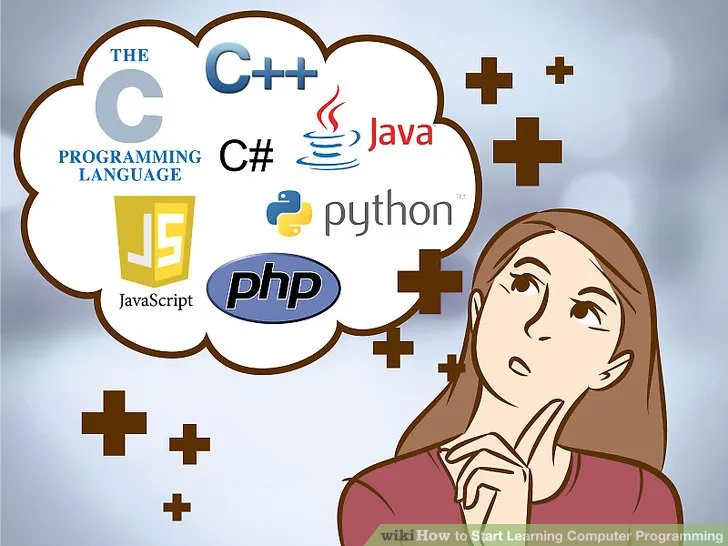
If you're new to coding, you're probably stuck on the same question a million others have asked:   "Which programming language should I learn first?"   Here’s the honest answer: It doesn’t matter as much as you think.   What matters is starting.   That said, if you want a solid recommendation: learn Python.   It’s readable, beginner-friendly, and used everywhere—from web development to data science to automation. You’ll get fast results and build real things early on, which keeps you motivated. You can make your researches more on Python.   Worried that picking the “wrong” language will ruin your future? Don’t be. Once you learn one language well, picking up others becomes way easier. Programming is more about thinking like a developer than memorizing syntax.   So instead of burning time comparing Python vs. JavaScript vs. C++ for weeks, just pick one and start building. Momentum beats indecision every time.   The best first language is the one you actually use. I hope you find this helpful.   Ayotomiwa

Ayotomiwa
Ayotomiwa

CodeSwift β€” AI-Powered Code Assistant for African Developers

CodeSwift β€” AI-Powered Code Assistant for African Developers

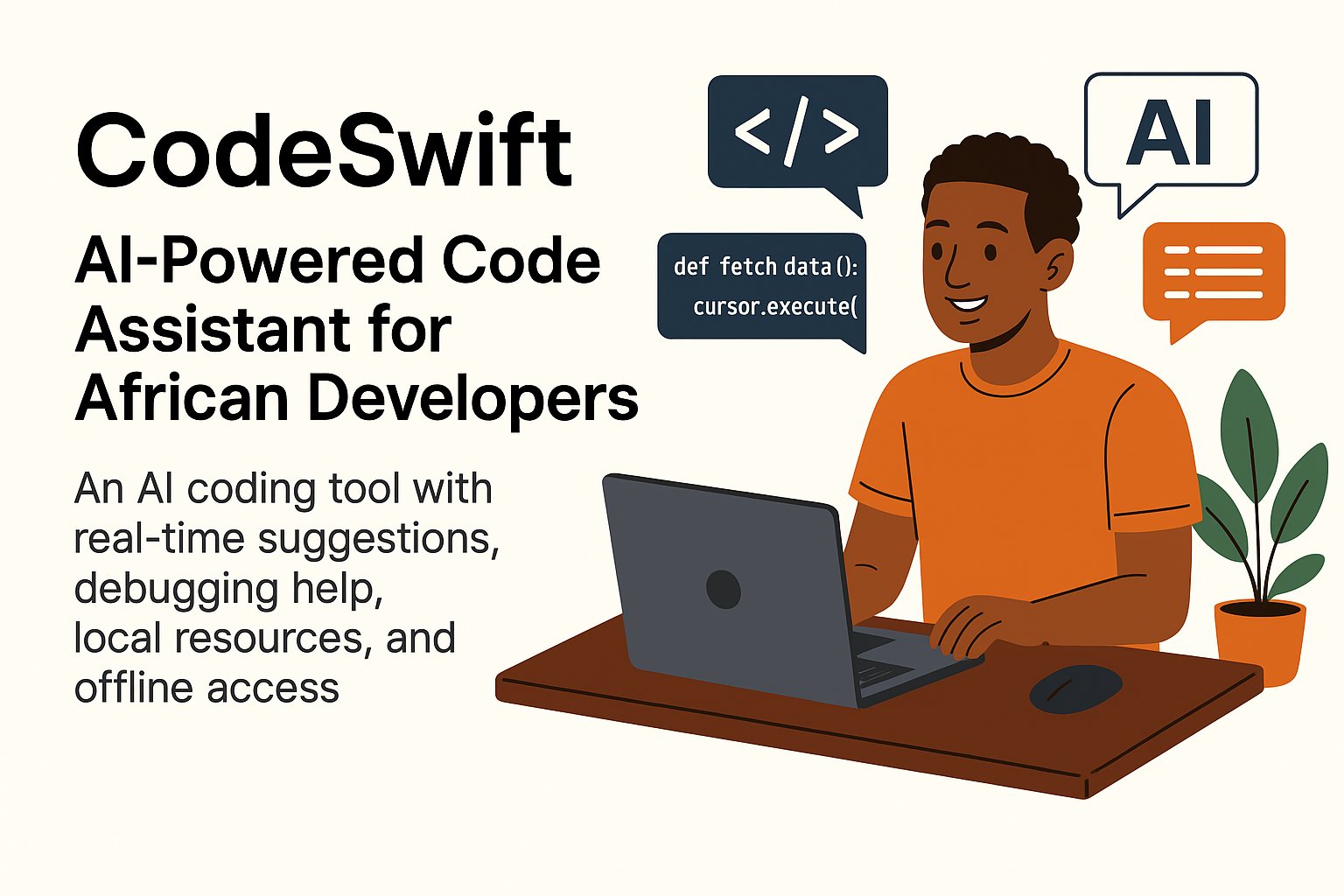
🧠 Business Concept: CodeSwift is a smart code assistant platform built specifically to support African software developers, startups, and coding students. It combines AI-powered code generation, debugging help, and localized learning resources all in one. Think of it as a hybrid of GitHub Copilot, Stack Overflow, and W3Schools, but localized for the African tech ecosystem. πŸ”§ Core Features: AI Code Helper: Real-time code suggestions and completions in Python, JavaScript, Django, SQL, etc. Fix bugs and generate documentation automatically. Local Dev Hub: Forums and community boards for African developers to collaborate and share tips. Local languages and broken English options to help beginners. Project Templates: Ready-to-deploy templates for fintech, e-commerce, school portals, and other in-demand African apps. Offline Mode: Lightweight desktop or mobile app that works offline (great for areas with poor internet access). Earn While You Build: Developers can monetize their snippets, courses, and project templates through a marketplace. πŸš€ Why It Matters: Many African developers face challenges like poor internet, lack of local mentorship, or platform access issues. CodeSwift fills that gap by offering accessible, affordable, and localized coding assistance. πŸ’Έ Monetization Model: Freemium access for students and early learners Pro subscription for startups and teams Marketplace commission on templates, code packs, and tutorials Brand sponsorships for dev events and hackathons 🌍 Vision: Empowering the next generation of African software developers by making coding support smarter, faster, and tailored to their environment.

Mautin
Mautin

Grammarly to acquire email startup Superhuman in AI platform push

Grammarly to acquire email startup Superhuman in AI platform push

Grammarly has signed a deal to acquire email efficiency tool Superhuman as part of the company's push to build an artificial intelligence-powered productivity suite and diversify its business, its executives told Reuters in an interview. The San Francisco-based companies declined to disclose the financial terms of the deal. Superhuman, once an exclusive email tool boasting a long waitlist for new users, was last valued at $825 million in 2021, and currently has an annual revenue of about $35 million .Grammarly's acquisition of Superhuman follows its recent $1 billion funding from General Catalyst, which gives it dry powder to create a collection of AI-powered workplace tools. Founded in 2009, the company has over 40 million daily users and an annual revenue exceeding $700 million. It's working on a name change with an ambition to expand beyond grammar correction. Superhuman, with over $110 million in funding from investors including IVP and Andreessen Horowitz, has been trying to create an efficient email experience by integrating AI. The company claims its users send and respond to 72% more emails per hour, and the percentage of emails composed with its AI tools has increased fivefold in the past year. It also faces growing competition as email giants from Google to Microsoft are adding more AI features. "Email continues to be the dominant communication tool for the world. Professionals spend something like three hours a day in their inboxes. It's by far the most used work app, foundational to any productivity suite," said Shishir Mehrotra, CEO of Grammarly. "Superhuman is the obvious leading innovator in the space." Last year’s purchase of startup Coda gave Grammarly a platform for AI agents to help users research, analyze, and collaborate. Email, according to Mehrotra who co-founded Coda, was the next logical step. Superhuman CEO Rahul Vohra will join Grammarly as part of the deal, along with over 100 Superhuman employees. “The Superhuman product, team, and brand will continue,” Mehrotra said. “It’s a very well-used product by tens of thousands of people, and we want to see them continue to make progress.” Vohra said that the deal will give Superhuman access to “significantly greater resources” and allow it to invest more heavily in AI, as well as expand into calendars, tasks, and collaboration tools. Mehrotra and Vohra see an opportunity to integrate Grammarly’s AI agents directly into Superhuman, and build the tools for enterprise customers. The vision is for users to tap into a network of specialized agents, pulling data from across their digital workflows such as emails and documents, which will reduce time spent searching for information or crafting responses. The company is also entering a crowded space of AI productivity tools, competing with tech giants such as Salesforce and a wave of startups.

Samuel
Samuel

Cloudflare launches tool to help website owners monetize AI bot crawler access

Cloudflare launches tool to help website owners monetize AI bot crawler access

Cloudflare has launched a tool that blocks bot crawlers from accessing content without permission or compensation to help websites make money from AI firms trying to access and train on their content, the software company said on Tuesday. The tool allows website owners to choose whether artificial intelligence crawlers can access their material and set a price for access through a "pay per crawl" model, which will help them control how their work is used and compensated, Cloudflare said. With AI crawlers increasingly collecting content without sending visitors to the original source, website owners are looking to develop additional revenue sources as search traffic referrals that once generated advertising revenue decline. The initiative is supported by major publishers including CondΓ© Nast and Associated Press, as well as social media companies such as Reddit and Pinterest. Cloudflare's Chief Strategy Officer Stephanie Cohen said the goal of such tools was to give publishers control over their content, and ensure a sustainable ecosystem for online content creators and AI companies. "The change in traffic patterns has been rapid, and something needed to change," Cohen said in an interview. "This is just the beginning of a new model for the internet." Google, for example, has seen its ratio of crawls to visitors referred back to sites drop to 18:1 from 6:1 just six months ago, according to Cloudflare data, suggesting the search giant is maintaining its crawling but decreasing referrals. The decline could be a result of users finding answers directly within Google's search results, such as AI Overviews. Still, Google's ratio is much higher than other AI companies, such as OpenAI's 1,500:1. For decades, search engines have indexed content on the internet directing users back to websites, an approach that rewards creators for producing quality content. However, AI companies' crawlers have disrupted this model because they harvest material without sending visitors to the original source and aggregate information through chatbots such as ChatGPT, depriving creators of revenue and recognition. Many AI companies are circumventing a common web standard used by publishers to block the scraping of their content for use in AI systems, and argue they have broken no laws in accessing content for free. In response, some publishers, including the New York Times, have sued AI companies for copyright infringement, while others have struck deals to license their content. Reddit, for example, has sued AI startup Anthropic for allegedly scraping Reddit user comments to train its AI chatbot, while inking a content licensing deal with Google.

Samuel
Samuel

Page 1

Let's Talk

Do you want to learn more about how I can help your company overcome problems? Let us have a conversation.