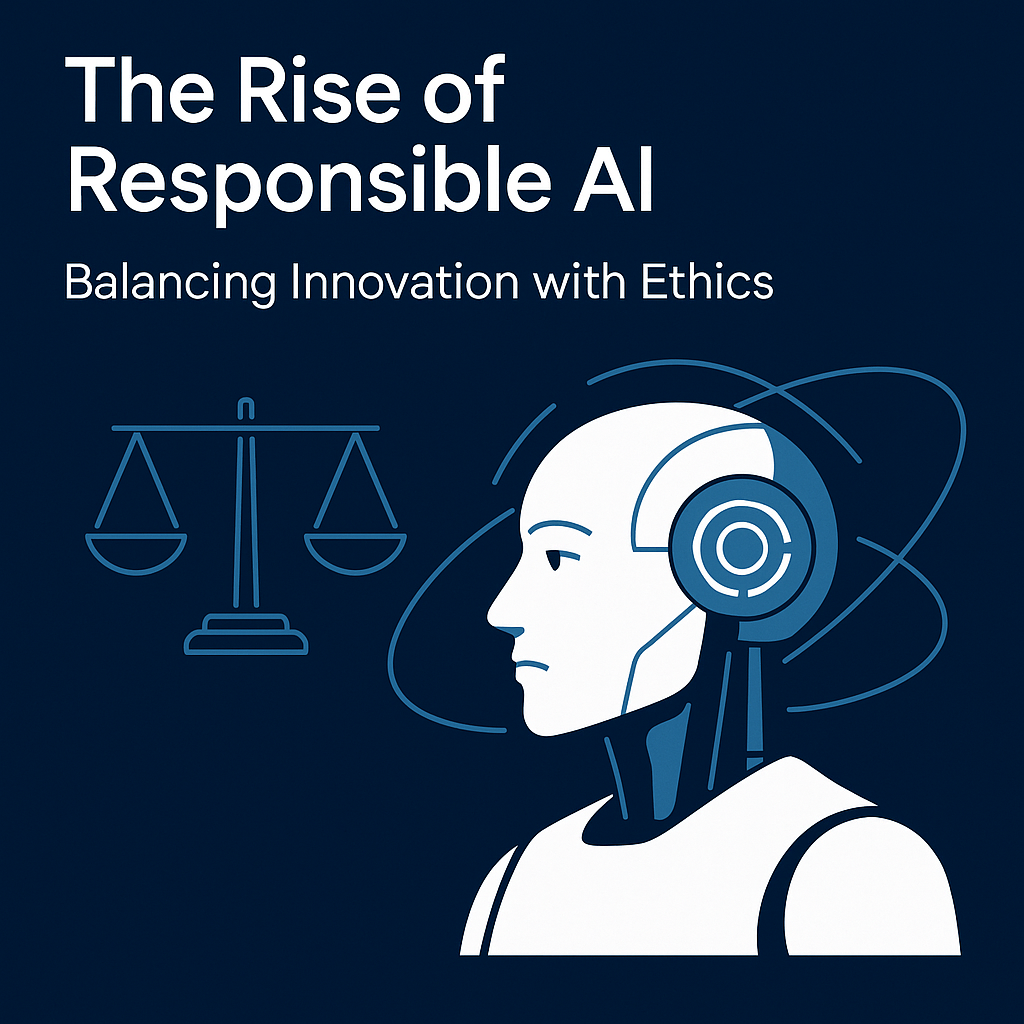
The Rise of Responsible AI: Balancing Innovation with Ethics
🧠 Overview / Introduction:
Artificial Intelligence (AI) is transforming the way we live, work, and interact. From voice assistants to self-driving cars and facial recognition systems, AI is driving the future. But as it grows, so do concerns about bias, misuse, privacy, and the ethical responsibility that comes with powerful technology.
This topic explores how developers, companies, and governments can build AI responsibly, ensuring it benefits humanity without causing harm.
🔍 Key Talking Points:
1. What Is Responsible AI?
-
Designing, developing, and deploying AI systems that are ethical, transparent, fair, and accountable
-
Making sure AI respects human rights, privacy, and diversity
2. Why It Matters:
-
AI Bias: Algorithms trained on biased data can discriminate (e.g., hiring tools or facial recognition failing on darker skin tones)
-
Misinformation & Deepfakes: AI is used to create fake content at scale
-
Surveillance & Privacy: Some AI systems are being misused to monitor citizens or manipulate behavior
-
Lack of Accountability: Who takes the blame when an AI makes a mistake?
3. Examples of Responsible AI in Action:
-
Microsoft’s “AI Ethics Board”
-
Google’s “Explainable AI” tools
-
OpenAI’s policies on model usage
-
African-led projects that promote ethical use of AI in agriculture or education
4. Key Principles of Responsible AI:
-
Fairness: No discrimination across gender, race, or age
-
Transparency: Make AI decisions understandable to humans
-
Accountability: Developers and companies must take ownership
-
Safety & Security: Prevent harmful use or unintended consequences
5. Tools & Frameworks to Promote Ethics:
-
Model cards (for transparency)
-
Data documentation (e.g., datasheets for datasets)
-
Bias detection tools
-
Governance policies
6. What Developers Can Do:
-
Audit your training data
-
Include diverse teams when building models
-
Communicate limitations clearly
-
Push for regulations and open dialogue
🧪 Interactive Ideas (for presentations or social):
-
Run a quick poll: “Should AI be regulated like medicine?”
-
Share a case study of AI bias (e.g., COMPAS in the US justice system)
-
Ask: “Have you ever experienced or seen unfair AI?”
🌍 Conclusion / Call to Action:
AI is powerful — but with great power comes great responsibility. Developers, startups, and tech leaders must prioritize ethics alongside innovation. The goal isn’t just smarter machines, but a smarter society that knows how to use them well.
Topics
Database
Web Performance
Accessibility
Tech Business
Artificial intelligence
Frameworks
Developer Tools
Full Stack Development
Social Apps
Google News
Digital skills
Let's Talk
Do you want to learn more about how I can help your company overcome problems? Let us have a conversation.